Showing posts with label Tips & Advice. Show all posts

Wednesday, 30 September 2015

Perks of Solo Renting

While it can certainly be fun, living with roommates may also be chaotic at times. Figuring out how to share utility bills, the bathroom, chores — and even your Wi-Fi connection — isn’t always easy.

If you’re wondering whether you’re ready to live on your own, check out these five perks of solo renting.

1. You have control over your bills

No more fighting over the thermostat, who’s hogging the internet, or shower time limits. Keep the temperature set at your ideal 67 degrees while streaming your favorite show sans-buffering, and take all the bubble baths you want.

When you live alone, you have (almost) complete control over what you see on your billing statements at the end of the month.

2. Those passive aggressive days are over

That note on your fridge telling you to keep your music down? Gone.

And you know those dishes that pile up in the sink while everyone waits for that one roommate to get the hint and finally wash her own pots and pans? You can kiss those days goodbye.

Blast that new Taylor Swift tune, and keep your dishes in the sink as long as you’d like.

Thursday, 17 September 2015

Eco-Friendly Home Updates That Save You Green

Each year, Americans save billions of dollars by employing energy-saving measures and investing in energy-efficient homes. Some upgrades — like Energy Star appliances, new hot water heaters, or geothermal pumps — can be pricey upfront, but there are plenty of small, inexpensive updates that will make a big difference in your budget over time. Here are some places to start.

Go low-flow

Thousands of gallons of water go down the drain every day. Toilet flushing and showering are the two biggest culprits. One solution is to upgrade your home’s plumbing fixtures so you use less water to accomplish the same task.

Low-flow fixtures, which are both inexpensive and easy to install, can reduce your home water consumption by as much as 50 percent, and save you up to $145 a year on electricity, according to Energy Star.

Saving Water At Home Effectively

Whether you live in a part of the country suffering from drought or just want to lower your next water bill, here are some simple tips to cut down on your water waste. Most of these recommendations cost only a few dollars, require minimal installation, and allow you to maintain your current lifestyle.

Target the toilet


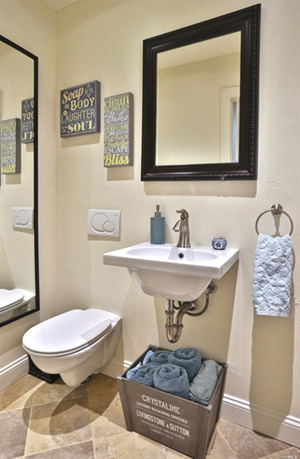
Dual-flush toilets allow you to use only as much water as necessary.

Toilets account for nearly 40 percent of all the water used inside the home. If your toilet is more than 20 years old, it’s probably a conventional model that uses 3.5 to 5 or more gallons per flush. Consider replacing your older toilet with a low-flush model that uses 1.6 gallons of water per flush.

If possible, opt for a dual-flush system that allows you to regulate the amount of water depending on your need. You will see a considerable drop in your water use, and you will recover the investment within a few years.

If a new toilet isn’t in your budget, create a water displacement device by filling a plastic container with water or pebbles and dropping it into your toilet tank. Be sure that the device does not interfere with the function of your toilet. With this trick, you can save one gallon of water per flush with minimal cost and installation.

Switch the showerhead

Showers account for 20 percent of the water used in an average home. For less than $10, you can install a low-flow showerhead that halves your water usage during your shower.

As an added bonus, a low-flow showerhead will decrease your electric or gas bill by reducing the amount of hot water you need to heat.

Install aerators for your faucets

Faucet aerators cut the flow of water much like low-flow showerheads. You can install them on kitchen and bathroom sinks to use up to 75 percent less water every time you wash dishes or brush your teeth. Faucet aerators cost only a few dollars and are easy to install.

Get the most from your appliances

Because dishwashers generally use less water than washing by hand, let the machine do the work. Make sure it’s full before starting so you don’t waste your water on just a few plates. The same applies to the washing machine — especially if your appliance lacks a setting for smaller loads.


Target the toilet


Dual-flush toilets allow you to use only as much water as necessary.

Toilets account for nearly 40 percent of all the water used inside the home. If your toilet is more than 20 years old, it’s probably a conventional model that uses 3.5 to 5 or more gallons per flush. Consider replacing your older toilet with a low-flush model that uses 1.6 gallons of water per flush.

If possible, opt for a dual-flush system that allows you to regulate the amount of water depending on your need. You will see a considerable drop in your water use, and you will recover the investment within a few years.

If a new toilet isn’t in your budget, create a water displacement device by filling a plastic container with water or pebbles and dropping it into your toilet tank. Be sure that the device does not interfere with the function of your toilet. With this trick, you can save one gallon of water per flush with minimal cost and installation.


Showers account for 20 percent of the water used in an average home. For less than $10, you can install a low-flow showerhead that halves your water usage during your shower.

As an added bonus, a low-flow showerhead will decrease your electric or gas bill by reducing the amount of hot water you need to heat.

Tuesday, 15 September 2015

Questions to Ask Before Renovating a Small Kitchen

By Marie Proeller Hueston

As the manager of the kitchen department in IKEA’s Paramus, NJ, location, Carol Smith is used to helping customers create their dream kitchen — even when space is limited. Here, she shares 10 things to consider before planning your own renovation.

How many people use the kitchen?


The needs of a family will inevitably be different from those of an empty nester. A family might want food storage lower or the microwave more accessible, so older children can help themselves to an after-school snack. A couple, meanwhile, might opt for an island with a cooktop and bar sink.

Common Moving Mistakes and How to Avoid Them

Moving to a new home involves so many tedious tasks and crucial decisions that it can be easy to overlook an important aspect of the relocation process — and lose lots of time and money as a result.

To avoid such emotionally and financially draining missteps, it helps to be aware of the most common moving mistakes, and learn how to prevent them.

1. Not having a good moving strategy

When faced with an imminent relocation, the first thing to do is decide if you are going to perform a self-move or hire professional movers.

If you are planning to use professional moving services, you need to book them as early as possible, and decide on a beneficial moving date. If possible, avoid moving in peak season or during the last weekends of a month, when your choice of available movers will be restricted and your relocation costs will be much higher.

Create a detailed moving calendar to properly organize the time you have left until moving day. If you fail to do so, you may easily miss something important, or may not allow yourself enough time for a certain task.

However, the greatest mistake you can make when planning your move is failing to set an appropriate moving budget. Underestimating any of the crucial factors (including moving company charges, transportation expenses, and insurance and post-relocation costs) when making your moving budget will cost you dearly.

Monday, 14 September 2015

Budgeting Home Renovations

Ready for a new kitchen? Anxious to redo the bathroom? The easy part is knowing what you want to remodel and why — whether you’re trying to keep up with your growing family, add office space, or increase your home’s value.

But figuring out how to renovate without breaking the bank can be tricky. Here are five key steps in planning your home renovation project.

Estimate costs

As a general rule of thumb, you should spend no more on each room than the value of that room as a percentage of your overall house value. (Get an approximate value of your home to start with.)

For example, a kitchen generally accounts for 10 to 15 percent of the property value, so spend no more than this on a renovation. If your home is worth $200,000, for example, you’ll want to spend $30,000 or less.

Steps to Take Now for a Faster Home Sale

A home sale typically comes as a result of a life change or a major decision. These decisions don’t usually happen overnight, providing homeowners with years to plan for a successful home sale. By using your time wisely, you will maximize your home’s value when you want to list and sell.

On your way to this point, you should be open to spending money in preparation. Investing in strategic home improvements will help facilitate a quicker and more profitable sale.

Selling a home is a large financial and emotional transaction — likely the largest in a lifetime. This makes strategic planning and counsel vital. Here are some steps you should take a year or more before you plan to list your home.

Connect with a local real estate agent

Real estate agents shouldn’t just show up, list a home, hold an open house and move on. Instead, they should be valuable assets to you years before listing. Connecting with a local agent and developing a relationship well in advance allows you to start learning the market and transitioning from the mindset of a homeowner to that of a seller.

Tuesday, 8 September 2015

3 Strategies for Getting Your Home Off the Market Fast

Most sellers have a specific goal when it comes to their transaction: a quick sale and top dollar. But sometimes fast action doesn’t align with achieving the highest and best value.

There are multiple schools of thought on this subject, and the perspective varies not only with where you are in the country, but also by price point, neighborhood and even down to the block. When it comes to pricing and the search for a quick sale, it’s always best to get help from a local agent.

Here are some strategies you can use to get offers fast.

The theory of under-pricing

Under-pricing means that you go to market with a list price that is just below what the comparable sales in your area support.

You can’t pinpoint the exact market value of a home until it sells. But before you list, there’s always a range. If you price your house at or below the bottom of the value range, you are under-pricing the home.

Ready to Sell Your Home?

Selling a home does not happen overnight. Typical sellers reach out to a real estate agent or start researching their home’s value online many months — sometimes even years — before they are ready to put the “For Sale” sign in their yard.

Often, a home sale is the result of some life event: a marriage, divorce, death in the family, retirement or another child. It’s typically hard to “time” these events; therefore, it’s not easy to time a real estate transaction. Here are some points a potential home seller should consider before deciding to list their home.

If you’re not certain, you’re not ready

If you don’t have a new home to move into or a plan once you sell your home, it’s not a good time to list your home for sale. Sellers without a real and concrete plan are not serious sellers, but only opportunistic.

A seller without a plan will likely be “testing” the market, and that translates into overpricing the home. If the seller overprices the home, it’s not going to do her any good. The market is smart, and rarely will a knowledgeable and active buyer overpay for a home.

Ask yourself, “If I get an offer and sign a contract for a 45-day close, do I know what I will do?” If the answer is no, you should simply not list, or you will do yourself more harm than good in the long run.

Monday, 7 September 2015

Planning For Open House Visits

Open houses are the gold standard in real estate. They’ve been around for decades and will be ingrained in the buying and selling of homes for years to come. But as a buyer, are you making the most of your open house visits?

Here are some best practices and helpful questions for buyers at all ends of the home-buying spectrum.

Use the open house to learn the market without committing

For the most part, open houses are just that — open. They make it possible for anyone to see a property in a certain time period, without an appointment or even being a very serious buyer.

New buyers should leverage the open house opportunity to get a feel for the market. In today’s world, using online search tools, mobile apps and the open house, a buyer can start to get a feel for pricing and the market before committing to an agent. Most importantly, open houses are some of the best ways for buyer and agent relationships to start.

Planning For A Temporary Move

When planning a temporary move, you know that your destination will not be your real home, but just a provisional shelter. This interim period, however, may last from several days to a few months or even years, so you need to be well prepared. Exactly what that preparation entails depends on the reason for your move.

Temporary relocation for work. If you have found seasonal work away from your hometown, or if you need to go to another city on a short-term assignment, you will need adequate temporary housing close to your workplace. A hotel stay is definitely the most convenient option for spending a few days or weeks in unfamiliar surroundings. You will only need a suitcase packed with your personal essentials and a few electronic devices – your phone, laptop, and camera. But, if your assignment is going to last for several years, you will probably plan a temporary move with your entire family and most of your belongings. In this case, the only logical option is to move into an appropriate rented property and take most of your personal possessions with you, or place them in temporary storage while your own home is leased out to tenants.
College or other academic pursuits. When you’re moving to study, you will only need to take a number of personal possessions. Your parents will probably keep the rest of your belongings at home, and you will likely return on a regular basis to enjoy the comfort of familiar surroundings and the company of family and friends. Even if you forget to pack something you need or enjoy, you can always take it on one of these visits back home, or have your parents send it.

How To Plan For A Stress Free Vacation

Before your vacation: Plan more


To get your vacation planning underway, think about your home security first. More than half of Americans will go on vacation this summer. The FBI says most neighborhoods will experience an increase of 10 percent to 18 percent in home burglaries during July and August. Many of these break-ins  can be prevented by taking some basic security steps.

Here are a few ways to secure your home before you leave.

Tell a trusted family member or friend where your important papers are located.
Set a timer on a lamp in a visible window so that your house seems lived in while you are gone.
Have your newspapers and mail put on vacation hold or ask your neighbor to bring them in for you.
Examine your house from the street like you are a nosy neighbor to make sure no valuables (like expensive electronics or artwork) are visible from the street. If a neighbor can see it, you can be sure a burglar can, too.
Once you have secured your home, it’s time to secure your suitcase. These tips will keep all your belongings in order while you’re on the road, and ensure smooth sailing.

What You Can Do To Prevent Forest Fires


There’s something magical about escaping to a cabin or a fire lookout in the woods. For many, summer isn’t complete without an annual trip off the grid.

But this year’s wildfire season has been particularly dire, with firefighters working around the clock — and some losing their lives — to keep our favorite spots safe.

If you’re looking for ways to protect your home or support firefighting efforts, here are a few places to start:

Learn about fire prevention and safety

When it comes to preventing forest fires, abiding by these three “don’ts” can go a long way.

Thursday, 3 September 2015

How To Get Your Home Sold Fast

In a strong market, if a home is priced right and shows well, it should sell within the first six weeks. If it doesn’t, many sellers become frustrated, especially if their agent begins pushing for a price reduction.


It’s a common rub: the seller thinks the agent just wants a quick sale, but the agent sincerely wants to help the seller get action. Agents understand that a listing loses momentum and excitement soon after being listed. Buyers will think of a home as stale, tired, or flawed if it sits on the market too long. Here are some ways to get more traction if your home is not generating offers.

Location, price and condition are key

You can’t change your home’s location, but you do have some control over the other two important buyer considerations. If the home is still sitting on the market after a few months, and especially if it has had no showings or offers, you need to look at the price and the condition.

Ways Families Can Ease the Stress of Moving Day

Moving is stressful. So stressful, in fact, that mental health experts rank it right up there alongside divorce, death of a loved one, job loss and major illness as one of the most stress-inducing life changes people encounter.

Sure, there’s the thrill of a new house, but that’s often partnered with the uncertainty of new jobs, schools and social circles.

While no one can promise your transition will go without hiccups, a little extra planning can help relieve some of the stress. Before the moving truck pulls up to your house, consider these tips to ensure your moving day goes as smoothly as possible:

1. Make it a kid- and pet-free day

You love your children. You adore your puppy. You’ll love them even more if they’re not underfoot on moving day. Hire a sitter to watch your children, preferably off-site. Pets need to be put in a room where they will not be in the way of the loading process; even better, board them. This alleviates stress for your kids and pets, and you’ll feel better knowing they are somewhere safe so you can focus on the move.

Getting To Know Your Neighbours

For many of us, leaving friends and neighbors behind can be the toughest part of moving to a new home. These five tips will help you make connections and settle into your new community in no time.

1. Knock, knock

For an extrovert, walking over to a neighbor’s home to say hello may feel like a no-brainer. But for more reserved personalities, this tried-and-true method usually requires a bit of warmup. Start with a friendly wave as you drive by, then work your way up to a face-to-face introduction. Remember, timing is everything. You don’t want to disturb your neighbors in the middle of dinner or while they’re struggling to get a fussy toddler down for the night. Try to catch them when they’re already outside, or aim for a weekend afternoon when everyone is much more likely to be relaxed and open to a brief, friendly chat.

Friday, 28 August 2015

Safety Upgrades That Could Save Renters Money

When renting an apartment, townhouse, condo or home, you might not realize how vital it is to have renters insurance. Sure, your landlord has insurance, but that policy likely only covers the structure of the building. This means that if anything happens to your belongings inside your rented space, you’ll have to pay to replace everything on your own.

Renters insurance is affordable and will protect your belongings from perils such as fire, wind or theft. It’s important to shop around for your renters insurance policy to ensure that you’re getting the best deal — and that doesn’t just mean the lowest price. You have to make sure you have the coverage you need, as well as a low price.

It’s equally important to ask about discounts. Different providers offer varying discounts, but all offer price reductions for safety features. When you’ve taken steps to reduce the risk of a disaster occurring in your pad, you’re a safer bet for insurance companies.

Monday, 24 August 2015

Online Vacation Rental Sites: What You Should Know..

While short-term home rental sites such as Airbnb and HomeAway have made finding and listing vacation properties and alternative lodging fast, easy and convenient both for hosts and guests, there are risks involved for both parties.

Here are a few ways to mitigate those risks, whether you’re renting a vacation villa or making some extra cash by welcoming paying guests into your home.

Subletting Tips For Renters

For many tenants, the demands of family, career or military responsibilities make it difficult to stick to a strict one-year lease agreement — making a sublease or sublet an attractive alternative to paying the balance of the agreement.

A sublease is an “assignment” of the original lease agreement terms to a third-party who was not involved in the original agreement. This means that the subletter is not only responsible for the duties and obligations listed in the lease, but enjoys the rights and amenities as well. Accordingly, it is almost always necessary to run this plan past the landlord.

Here’s how to manage a subletting arrangement legally and effectively.

Notify your landlord and get them onboard

Nearly all residential leases contain a clause pertaining to subleasing. Some forbid it outright. Others take a more liberal approach and allow tenants to freely sublease. Most common, however, is the middle-of-the-road option that gives the landlord final say over whether a sublease arrangement is allowed.

In most scenarios, signed written consent will be required from the landlord prior to subleasing with a third-party. Legally speaking, this protects the landlord from damage caused by unknown, unapproved subletters, and also protects the tenant from an attempt by the landlord to avoid damage liability by a subletter he “knew nothing about.”

Some states forbid a landlord from arbitrarily or unreasonably withholding consent to a sublease. If you’re facing an uphill battle with a landlord who is refusing to allow a sublease to a great candidate, a landlord and tenant lawyer may be able to help.

Understand the legal relationship and obligations

As a tenant, it may seem like you can wipe your hands of the lease agreement once a sublessee is securely in place. After all, damage or late rent is on them — right?

Probably not.

Because of ancient property interest laws — and a concept known as “privity of contract” — the original legal agreement between the tenant and the landlord remains alive and well, even with a signed sublease.

By agreeing to sublease, the landlord has agreed to collect rent from the subletter first, and ask the subletter to make necessary repairs to the unit. But if the subletter skips town or refuses to comply, the landlord can seek reimbursement from the original tenant — even if she had nothing to do with the damage.

So if you’re choosing to sublease, be sure to find a reliable and dependable person to take over the balance of the lease.

Sign a sublease agreement

Signing a sublease agreement is a smart way to protect the original renter from liability caused by the subletter. The landlord can still come after the original tenant for late rent or damage to the unit if the subletter falls down on their duties, as discussed above. But a proper sublease can give the tenant some legal ground to stand on if they want to then seek compensation from the subletter.

Likewise, the sublease agreement can also protect the subletter from unreasonable claims by the original tenant, including damage that occurred before the subletter moved in.

Collect a security deposit

For extra protection, the original tenant may want to require a security deposit from the subletter. Tenants should request enough for at least two months’ rent, and the amount should be kept in a non-interest-bearing escrow account.

The security deposit can be used in the event the landlord demands repayment for damage to the unit or unpaid rent. And, of course, the tenant should return all funds to the subletter if/when the sublease term ends without incident.

What You Should Have In Your Emergency Evacuation Kits

From hurricanes to earthquakes and wildfires, natural disasters can be frightening. While these emergencies come in many forms and may require anything from a brief absence to permanent evacuation, there’s one thing you can do to ensure your safety — prepare.

If you’re forced to leave your home, you may have less than a minute to get out. Having an emergency evacuation kit packed and ready to go could mean the difference between your wellbeing and hardship.

“You can’t control disasters, but you can control how prepared you are for them,” said Rafael Lemaitre, director of public  for the Federal Emergency Management Agency. “The outlook for the coming Atlantic hurricane season, for example, looks to be quieter than normal, but all it takes is one to affect you and your community. It only takes one disaster to change your entire life, so it makes sense to prepare.”

Linkwithin

Link